Australian Signature: The Natural Handwritten Font That Elevates Real-World Design
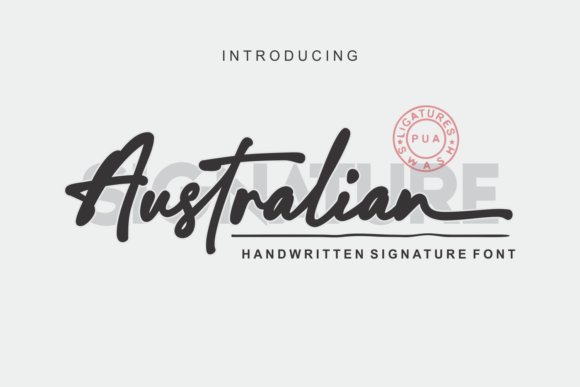
There’s something quietly powerful about handwriting that feels authentic—not traced, not templated, but alive with rhythm and intention. Australian Signature captures that essence in digital form. It’s not just another script font. It’s a natural and classy handwritten signature font, carefully crafted to bring warmth, personality, and professionalism to real-world projects—without sacrificing legibility or versatility.
Why “Natural” Matters More Than Ever
In an age of AI-generated content and hyper-polished templates, authenticity stands out. Designers, small business owners, and creatives are actively seeking typefaces that feel human—not sterile, not over-engineered. Australian Signature answers that need. Its letterforms flow with organic variation: subtle shifts in stroke weight, gentle tapering on terminals, and soft entry/exit strokes that mimic ink meeting paper. No two ‘a’s look identical—and that’s intentional. This controlled imperfection is what makes it feel like someone truly wrote it.
This isn’t decorative calligraphy meant only for posters. It’s designed for use where impact meets function—like a wedding invitation that conveys elegance without pretension, or a boutique café’s menu that feels personal and inviting. Because it’s built from observation—not algorithm—it avoids the robotic repetition that undermines trust in digital typography.
Where Australian Signature Fits in Your Workflow
You don’t need to be a typographer to benefit from Australian Signature. Its strength lies in how easily it slots into everyday creative tasks—whether you’re using Canva, Adobe Illustrator, Affinity Designer, or even Microsoft Word (with OpenType support enabled).
- Titles & Headlines: Use it for hero text on websites, social media banners, or book covers. Its confident x-height and open counters ensure readability even at smaller sizes on screens.
- Invitations & Stationery: Wedding suites, baby announcements, or corporate thank-you notes gain instant sophistication. Pair it with a clean sans-serif for body text—like Montserrat or Inter—and the contrast feels intentional, not chaotic.
- Branding Elements: Logos, monograms, or signature lines for service-based businesses (photographers, florists, therapists) benefit from its approachable authority. It signals care and craftsmanship—without shouting.
- Printed Products: From greeting cards to packaging labels, Australian Signature holds up beautifully in offset and digital print. Its generous spacing and balanced kerning prevent crowding, even with tight layouts.
PUA Encoding: Swashes, Ligatures, and Real Creative Control
Here’s where many script fonts fall short: they offer beautiful glyphs—but hide them behind complex workarounds. Not Australian Signature. It’s PUA encoded, meaning every alternate character, swash, ligature, and stylistic set is accessible directly through your keyboard or glyph panel—no plugins, no coding, no guesswork.
That means pressing Shift + S might give you a flourished capital ‘S’, while typing ff could automatically trigger a connected ligature. You can mix formal and casual variants within the same line—say, a bold swashed initial followed by refined lowercase forms—to guide the eye and add narrative rhythm.
This isn’t just convenience—it’s creative empowerment. When you’re designing under deadline, spending minutes hunting for a specific glyph breaks flow. With Australian Signature, those expressive details are always one keystroke away.
Practical Considerations Before You Use It
Like any tool, Australian Signature shines brightest when matched to the right job. Here’s what to keep in mind:
Legibility First
It’s highly readable—but not for long paragraphs. Reserve it for headings, quotes, names, and short bursts of emphasis. For body copy, pair it thoughtfully. A well-chosen sans-serif or low-contrast serif creates balance and ensures accessibility, especially for readers with visual processing preferences.
Licensing Clarity
Australian Signature is typically licensed for both personal and commercial use—including web embedding and app integration—but always verify the license terms from your source. Some vendors offer extended licenses for unlimited product usage (e.g., selling printable stationery on Etsy), so check before scaling.
File Compatibility
It’s available in OTF and TTF formats, ensuring broad compatibility across platforms. On macOS and Windows, it installs like any system font. In web projects, use @font-face with WOFF2 for optimal performance—or embed via trusted font hosting services if licensing permits.
Real Projects, Real Results
Take Sarah, a Melbourne-based wedding planner. She switched from generic script fonts to Australian Signature for her client-facing PDFs and printed suite designs. Her feedback? “Couples tell me the invites *feel* like us—warm, considered, not flashy. And because I can toggle swashes on/off in seconds, I customise each set without doubling my workload.”
Or consider Ben, who runs a small-batch olive oil label in South Australia. He used Australian Signature for the producer’s name on his front label—paired with a crisp geometric sans for origin details and tasting notes. The result? Shelf presence that communicates heritage and care, not just ingredients.
Even educators are adopting it—handwritten-style certificates, classroom signage, and student award templates gain sincerity without looking childish. The key is restraint: one strong application, not blanket coverage.
How It Compares—Without the Jargon
You might wonder how Australian Signature differs from other popular scripts like Pacifico, Great Vibes, or Allura. The distinction isn’t just aesthetic—it’s functional.
- Pacifico leans playful and rounded—great for food trucks or casual brands, less suited for formal correspondence.
- Great Vibes is elegant but tightly spaced and more ornamental; it demands generous line height and careful sizing.
- Allura has high contrast and dramatic flourishes—beautiful, but less forgiving in small applications or dense layouts.
Australian Signature sits in a sweet spot: refined enough for luxury, relaxed enough for everyday use, structured enough for clarity, and expressive enough for distinction. It doesn’t try to be everything—it does a few things exceptionally well.
Getting Started—No Learning Curve Required
You don’t need to study calligraphy to use Australian Signature effectively. Start simple:
- Install the font and test it in a blank document.
- Type a short phrase—“Thank You”, “Est. 2022”, or a name—and explore the PUA characters. Try capitals first, then lowercase, then combinations.
- Adjust tracking slightly (+10 to +30) to let the letters breathe—especially in all-caps settings.
- Export a mockup to your phone. Does it read instantly? Does it feel right for the context?
Most users find their ideal application within 15 minutes. That immediacy is rare—and valuable—when time is scarce and expectations are high.
Final Thought: Typography as Quiet Confidence
Good typography doesn’t draw attention to itself. It supports meaning, reinforces tone, and disappears just enough—so the message, the brand, or the person remains centre stage. Australian Signature achieves this by balancing craft with clarity, artistry with utility, and elegance with ease.
Whether you're designing for clients, launching a side hustle, or simply wanting your personal projects to reflect your standards—this is a font that works with you, not against you. It’s not flashy. It’s not trend-dependent. It’s natural, classy, and consistently reliable—just like a well-placed signature should be.