Paw: A Playful Font for Pet Lovers
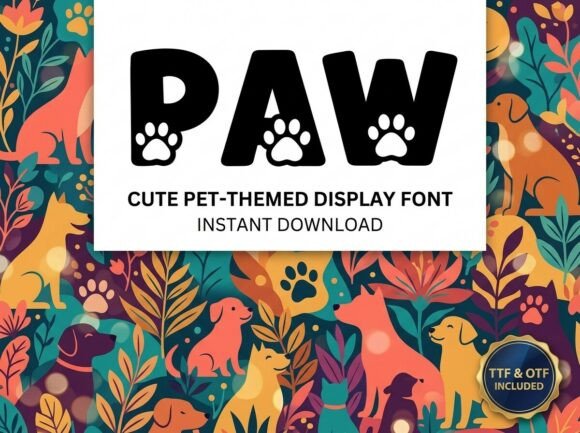
If you're looking to add a touch of warmth and whimsy to your designs, Paw is the perfect font to consider. This display font is more than just a stylish choice—it's a creative tool that brings the joy of pets into every letter. With its ultra-chunky, bubbly black letterforms, Paw features cute animal paw prints seamlessly integrated into the negative space of each character. The result is a typeface that feels both friendly and high-impact, making it ideal for any project with an animal theme.
Designed with a playful personality, Paw exudes a sense of approachability and positivity. Its bold, rounded shapes and subtle paw print details make it stand out in a crowd. Whether you're working on a logo, a flyer, or a social media graphic, Paw adds an instant visual cue that speaks directly to pet lovers. It’s not just a font—it’s a statement of affection for animals and a way to connect with your audience on a personal level.
Where Paw Shines in Design
Paw is especially effective in projects that require a warm, inviting tone. Veterinary clinics, dog daycares, and pet shops can use it to create logos and branding materials that feel welcoming and trustworthy. The font’s friendly aesthetic helps build a connection with customers who are passionate about their pets. For example, a pet store might use Paw in packaging design to make product labels more eye-catching and memorable.
In editorial design, Paw can be used for headings in children's books or animal-themed publications. Its playful style complements stories and illustrations that feature animals, making the reading experience more engaging. Similarly, in publishing, it can be used for covers or promotional materials that target pet owners. When paired with other fonts, Paw can help establish a visual hierarchy that draws attention to key messages without overwhelming the reader.
On digital platforms, Paw works well for web design, social media graphics, and email newsletters. Its boldness ensures that text remains legible even at smaller sizes, while its unique details add visual interest. For instance, a pet-related blog could use Paw for headlines to make them more dynamic and appealing. In commercial settings, it’s also useful for merchandise like t-shirts, mugs, and stickers that celebrate pet ownership.
The Impact of Paw on Branding and Communication
When used effectively, Paw can significantly influence how a brand is perceived. Its friendly and joyful appearance helps create a positive association with the business or message it represents. This is especially important in industries where trust and empathy are key, such as pet care or animal welfare. By choosing a font that reflects these values, brands can better connect with their target audience.
Readability is another factor to consider when using Paw. While it’s designed to be visually striking, it’s also optimized for clarity. The large, open letterforms ensure that text remains easy to read, even in smaller sizes. However, it’s best suited for short phrases rather than long blocks of text. For example, using it in a headline or a call-to-action button can draw attention without compromising legibility.
Consistency is crucial in branding, and Paw can help maintain a cohesive look across different materials. When paired with complementary fonts, it can create a balanced and professional design. For instance, pairing it with a clean sans-serif font like Helvetica or Arial can provide contrast while keeping the overall aesthetic unified. Testing different pairings is essential to find the right combination that enhances the message without distracting from it.
Choosing and Using Paw Effectively
Before incorporating Paw into a project, it’s important to evaluate whether it aligns with the overall vision. Consider the context of the work and the intended audience. If the goal is to create a fun, lighthearted vibe, Paw is an excellent choice. However, if the design requires a more formal or minimalist approach, it may not be the best fit.
Testing the font in different sizes and formats can help determine its effectiveness. Try using it in mockups or prototypes to see how it looks in real-world scenarios. Pay attention to how it interacts with other design elements, such as colors, images, and layouts. This will help ensure that it enhances the overall composition rather than competing with it.
Reviewing the included styles of Paw is also important. Some fonts come with variations like bold, italic, or condensed versions, which can offer more flexibility in design. Understanding the full range of options allows for greater creativity and adaptability. Additionally, checking the licensing terms is essential, especially if the font will be used commercially. Make sure the license covers the intended use and provides the necessary rights for distribution and modification.
For designers and small business owners, Paw can be a valuable addition to their design assets. It offers a unique way to express personality and passion while maintaining professionalism. Whether you're creating a logo, a marketing campaign, or a personal project, Paw has the potential to elevate your work and make it more engaging for your audience.
Ultimately, Paw is more than just a font—it’s a creative expression of love for animals and a tool for building stronger connections through design. By understanding its strengths and limitations, you can use it to enhance your projects and leave a lasting impression on your audience.